


Fixed Blade Knives
(203)


- Fixed Blade
 Filters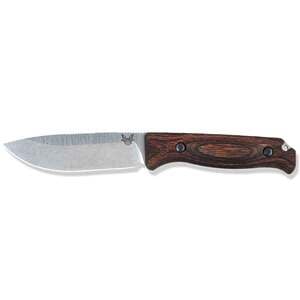


Benchmade Saddle Mountain Skinner 4.2inch Fixed Blade Knife
 Pick Up in Store
Ship To Home
Pick Up in Store
Ship To Home


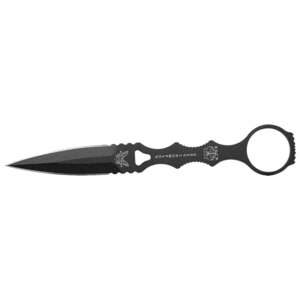
Benchmade SOCP 3.22 inch Fixed Blade Knife
Ship To Store
Ship To Home


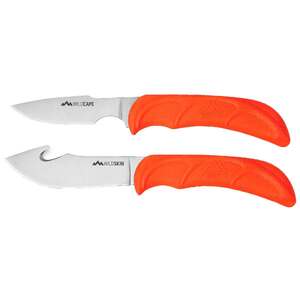
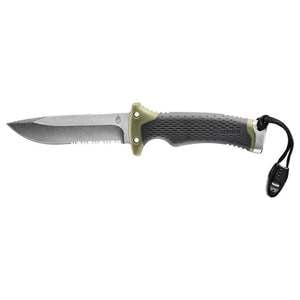
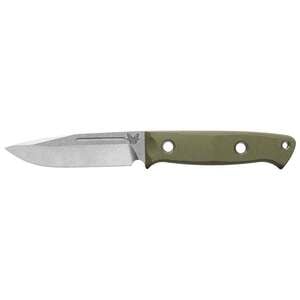


Benchmade Bushcrafter 4.38 inch Fixed Blade Knife
Pick Up in Store
Ship To Home
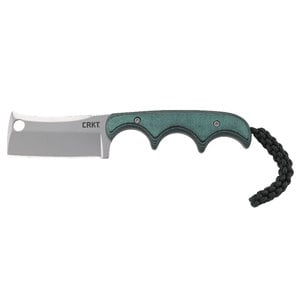
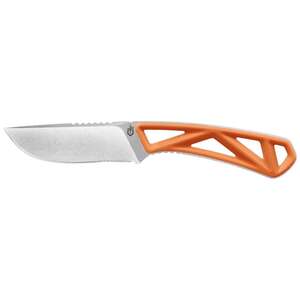
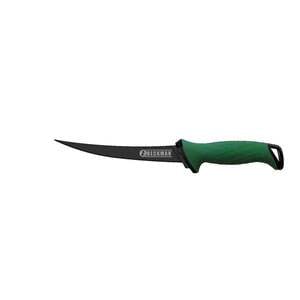
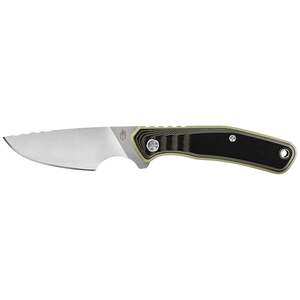
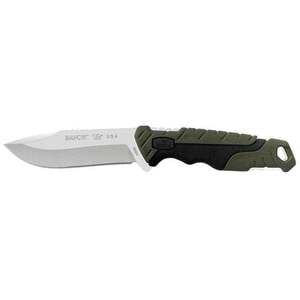
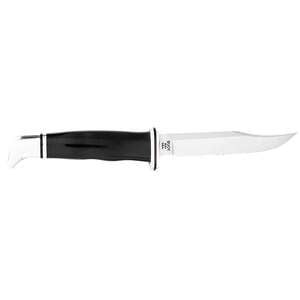
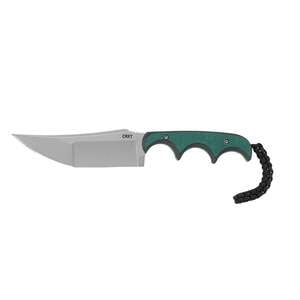
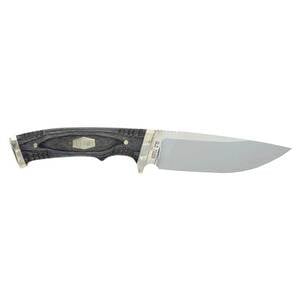
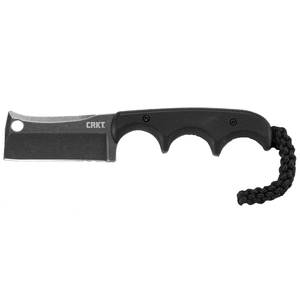
CRKT Minimalist Cleaver 2.13 inch Fixed Blade Knife
Pick Up in Store
Ship To Home
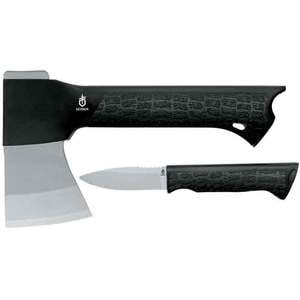
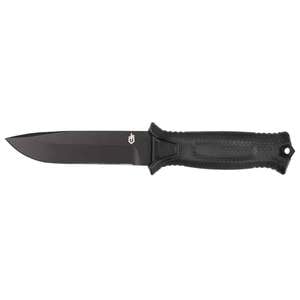
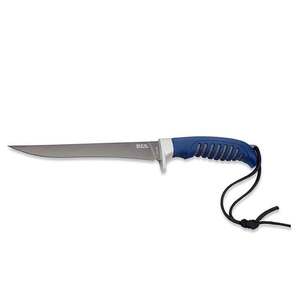
The foremost is strength. The blade is permanently set in a handle, providing a stronger bond. You can exert greater force with a fixed blade and there’s no chance of it folding under pressure, cutting your fingers as can happen with a folding knife. They’re easier to clean since the entire surface is exposed with no inner creases to worry about. Though you shouldn’t use them as tools unless in dire circumstance, a fixed blade works better as a can opener, wood chopper or screwdriver. They’re much easier to field dress big game with as well.
There are three types of fixed blade knife usage, tactical, sportsman and home. For tactical use, a fixed blade knife provides better personal protection in close range combat, it cuts seatbelt straps easier and lends itself to rugged military or police usage in combat or crime scenes. For the sportsman, a fixed blade knife is essential. Cleaning fish, gutting big game, skinning hides, shaving branches for kindling, cutting rope, piercing holes in canvas and even cutting off a shirttail if one of your hunting buddies misses a close-range shot. For the homeowner, a fixed blade knife has a thousand uses. Repairing fabric, cutting rope, adjusting straps, cutting tags and in the most dangerous work at home, opening blister packed items without ending up in the emergency room.
Opinions vary on the best type of steel for a fixed blade knife. An entire artisan industry has arisen in knife making over the last two decades and these professionals, and semi-professionals almost always prefer Damascus steel, but there are other types just as valuable. 1066 Carbon, S30V 1066, D2, 5Cr14MoV and VG-10 are all contenders when it comes to the discussion of the best knife steel.
Open your kitchen utensil drawer and you’re likely to find a half-dozen or more styles of fixed blade knives. You wouldn’t want to filet a walleye with a butcher knife, but then again that filet knife isn’t that handy in cutting open a watermelon. Knifes can have a straight or curved spine, a wide, triangular blade or a thin one. The point can be sharp, rounded or somewhere in between. A cleaver works best for chopping vegetables, while a paring knife makes short work of peeling fruit or potatoes. They all have their purpose.
Unless you’re a martial arts expert, the best advice for facing someone in a knife fight is to run. Martial arts instructors all say to run from a knife but charge a gun. For self-defense, a knife can be a last line of defense. Bayonet charges are a thing of the past.
Screwdrivers and knives share a common construction. The best screwdriver is a solid steel shaft that extends to the butt of the handle. Knives are the same. A full tang is a single piece of steel from the tip of the blade to the base of the handle. They’re stronger, they won’t slip, they’re less likely to break and they’re durable.
Many grandsons have inherited a hunting knife that is worn to a fine, paper-thin edge from decades of loving care by their grandfather. A knife should be cleaned, oiled and sharpened regularly. There is still no substitute for the edge you can get from a drop of oil on an Arkansas stone. It remains the most popular and effective whetstone in America.
Not all knives are “Rambo” style survival types with everything except the kitchen sink packed into a hollow handle. The features to look for in a fixed blade knife are simple. Blade shape is the first, what are you going to use this knife for? If it’s hunting that’s much different than a fishing knife. Pointed, curved, drop point, cleaver, etc... are all types to consider. The steel is the second, blade material is measured in quality and price. If you can afford it, also go with a full tang knife, you’ll never be sorry. The handle is another feature to consider. Bone or antler handles are attractive and conversation starters, but a quality synthetic will give you a better grip in cold, wet conditions. The last item is size and weight. A heavy knife is great for chopping and scraping, but a smaller knife is best if your skinning coyotes, fox or raccoon and improves your dexterity.

