Bear Defense Handguns
(15) Filters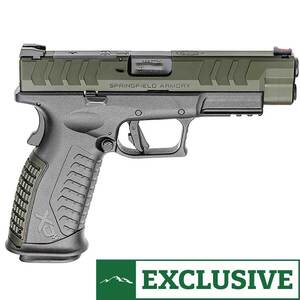
Springfield Armory XD-M Elite 10mm Auto 4.5in Black/OD Green Pistol - 16+1 Rounds
 Ship To Store
Ship to FFL
Ship To Store
Ship to FFL
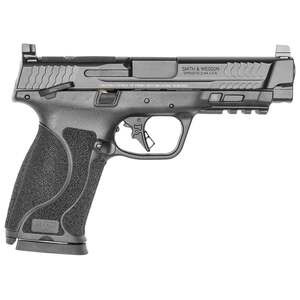
Smith & Wesson M&P M2.0 10mm Auto 4.6in Black Pistol - 15+1 Rounds
Ship To Store
Ship to FFL
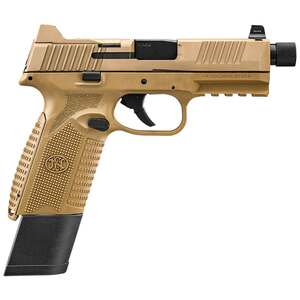
FN 510 Tactical 10mm Auto 4.7in Flat Dark Earth Pistol - 22+1 Rounds
Pick Up in Store
Ship to FFL

Springfield Armory XD-M Elite Gear Up Package 10mm Auto 4.5in Black Melonite Pistol - 16+1 Rounds
Ship To Store
Ship to FFL
 Ship To Store
Ship to FFL
Ship To Store
Ship to FFL
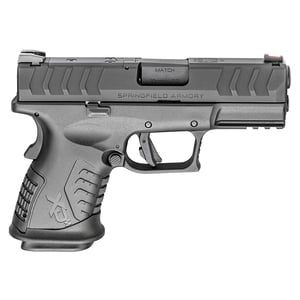
Springfield Armory XD-M Elite Competition OSP 10mm Auto 3.8in Black Melonite Pistol - 11+1 Rounds
Ship To Store
Ship to FFL
 Ship To Store
Ship to FFL
Ship To Store
Ship to FFL
 Ship To Store
Ship to FFL
Ship To Store
Ship to FFL
 Ship To Store
Ship to FFL
Ship To Store
Ship to FFL
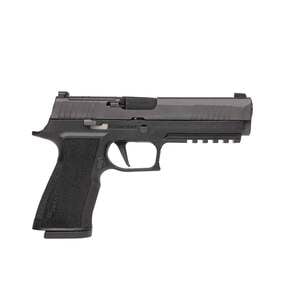
Sig Sauer P320 XTEN 10mm Auto (ACP) 5in Nitride Black Pistol - 15+1 Rounds
Ship To Store
Ship to FFL
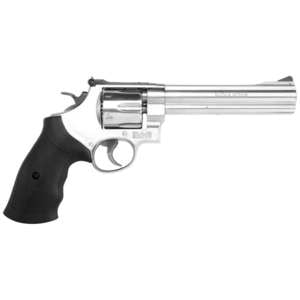
Smith & Wesson 610 10mm Auto 6.5in Stainless Revolver - 6 Rounds
Ship To Store
Ship to FFL
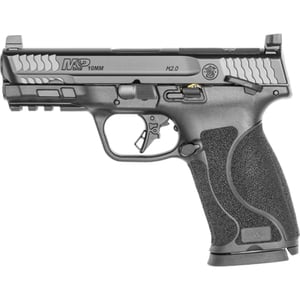
Smith & Wesson M&P M2.0 10mm Auto 4in Black Pistol - 15+1 Rounds
Ship To Store
Ship to FFL

 In Select Stores
 Ship to FFL
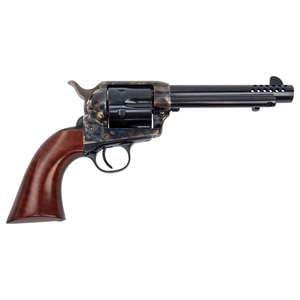 In Select Stores
Ship to FFL
In Select Stores
Ship to FFL
Both work. A revolver chambered in a Magnum-class round (like .44 Magnum or .454 Casull) produces greater raw energy per round fired than most other semi-automatic handguns and is also much less likely to malfunction, regardless of what angle you shoot at or whether you have the barrel pressed up against the body of the animal if it gets over you.
On the other hand, a semi-automatic handgun provides the ability to fire more rounds (up to 15 in a 10mm Glock 20, for instance) as opposed to 5 or 6. Semi-automatics also recoil less than Magnum revolvers, which means you can place additional rounds on target faster. That’s one reason why many Alaskan hunting guides currently carry 10mm semi-autos.
Regardless of which one you ultimately decide to use, carry it in a chest rig or hip holster so you can access the weapon quickly.
Penetration is much more important than expansion. The .44 Magnum is a very good defensive cartridge and remains the standard for many people. It can drive a 300 grain hard cast bullet through a bear's thick hide, muscle, and bone and into the underlying organs. That’s impressive in its own right, and larger calibers like the .454 Casull, .460 S&W Magnum, and .500 S&W Magnum are yet considerably more powerful.
The 10mm Auto has become an extremely popular choice for bear defense in recent years because of its higher capacity and its manageable recoil. Hard cast, flat nosed bullets will give you deeper penetration than hollow points. While effective for defense against people, against bears hollow points tend to expand too quickly and stop before they reach vital areas.
Rifles win over handguns on ballistic ability every single time. When using a .45-70 or .338 Win Mag rifle, for instance, you'll typically deliver anywhere from three to five times as much kinetic energy as you would with most handguns. That alone makes the rifle a better choice if you are planning to hunt bears.
But a handgun has a significant advantage when it comes to how readily available the gun can be. Many times when people encounter bears in the wild, they do so at very short range and sometimes while juggling other items (such as a fishing pole, a camera, or a backpack). A rifle slung over a shoulder or leaning up against a tree is simply not as accessible as a handgun strapped to the hip or carried in a chest rig. A handgun can also be fired with just one hand, if need be.
No, and the information is pretty solid. In studies done by Alaskan researchers on bear attacks, it was shown that spray stopped aggressive behavior from bears in about 90% of all studied cases.
Firearms did not perform nearly as well due to the difficulty of shot placement when under extreme duress, as a wound that is not fatal will not necessarily stop the bear. Spray also deploys faster than a firearm, you do not need to make an accurate shot, and it will continue to work if your hands are trembling.
It’s worth noting that there are certain situations where spray will not work. For example, in extremely windy conditions, during very heavy rains, or if the bear has already made contact.
That’s why many people carry both: bear spray as an initial defense mechanism, and a handgun as a backup.

